

The vacation rental management industry looks very different in 2026 than it did a few years ago. The era of one company gobbling up 40,000 properties across every zip code in America has given way to something more nuanced.
Owners are more sophisticated. Return expectations are higher. And the cracks in the national-scale model have become impossible to ignore: inconsistent housekeeping, impersonal service, a support line that rings to a call center with no idea what your market looks like in February.
At the same time, the old binary of giant national operator or independent neighborhood manager has dissolved. A new category of manager has emerged: companies that combine genuine local expertise with national-grade technology and infrastructure. That is the space Portoro occupies, and it is the lens through which this guide was written.
This page covers eight vacation rental management companies across a range of service models, fee structures, and destination types. Whether you own a ski cabin in Colorado, a beachfront cottage in Florida, or a farmhouse in the Catskills, the goal is the same: help you find the right fit, not just the biggest name.
A note on transparency. Portoro is the author of this guide and is included in the list below. The evaluation methodology applies equally to all companies reviewed.
What is a vacation rental management company?
A vacation rental management company handles the operational and commercial responsibilities of renting out a short-term rental property on behalf of the owner. The depth of that service, and the corresponding fee, varies significantly by company and model. Three primary tiers define the market.
The manager handles everything: marketing and listing creation, multi-channel distribution, dynamic pricing, guest vetting and communication, cleaning coordination, maintenance dispatch, permit compliance, and owner reporting. The owner collects revenue and retains ownership; the manager runs the operation.
The manager creates and manages listings, sets pricing, and handles booking and guest communication. Cleaning, maintenance, and on-the-ground operations remain the owner's responsibility. This model suits hands-on owners who live near their property and have reliable local vendors already in place.
Tools like Guesty, Wheelhouse, or OwnerRez provide property management infrastructure such as channel management, dynamic pricing, and owner dashboards, but they are not managers. They empower self-managing owners or support management companies' back-end operations.
The right tier depends on your proximity to the property, your operational bandwidth, and your investment goals. If you are managing remotely and own a premium asset, full-service is almost always the right answer.
How we evaluated these companies
This guide is based on publicly available company information, industry data, and Portoro's direct experience operating in the vacation rental market. We evaluated each company across eight criteria.
- Service depth: What is actually included in the management fee versus billed separately?
- Local expertise: Does the company genuinely operate in the market, or list it on a map from a central office?
- Technology and transparency: What does the owner portal show? How current is the data? How is dynamic pricing applied?
- Guest experience standards: What protocols govern cleanliness, check-in, and in-stay issue resolution?
- Property protection: What happens before guests arrive and after they leave?
- Revenue performance: What tools and methodologies drive rate optimization?
- Fee structure clarity: Is the pricing comprehensive, or do add-ons erode the headline number?
- Owner satisfaction: What do actual owners report about their experience?
Quick comparison
A summary before we go deeper into each company.
| Company | Service model | Markets | Best for |
|---|---|---|---|
| PortoroGuide author | Full-service, premium | 7 select mountain & coastal US destinations | Premium homes in select leisure markets |
| AvantStay | Full-service, luxury | 100+ US leisure markets | Large group-travel homes |
| Vacasa (Casago) | Full-service, national scale | 400+ US markets | Hands-off owners in mainstream markets |
| Evolve | Marketing / booking only | Nationwide | Cost-conscious, hands-on owners |
| Meredith Lodging | Full-service, regional | Oregon Coast, Central OR, Mt. Hood | Pacific Northwest property owners |
| iTrip Vacations | Full-service, franchise | 100+ US resort destinations | Resort-market owners |
| SkyRun | Full-service, franchise | 30+ mountain / ski markets | Ski and mountain resort properties |
| Grand Welcome | Full-service, franchise | 50+ US cities | Broader geographic coverage |
The eight companies in detail
What follows is a profile of each company: service model, what owners can expect, and who each is best suited for. We have kept the profiles factual and fair. The goal is to help you make the right call for your specific property, not to steer you anywhere.
1. Portoro
Best for premium mountain and coastal homes

Portoro is a premium, tech-enabled vacation rental management company operating exclusively in select mountain and coastal US leisure destinations. The company was built around a specific thesis: that the owners most underserved by national-scale operators are those with high-quality properties in high-demand leisure markets. These are owners who want boutique-level care for their home but also expect rigorous pricing strategy, institutional-grade reporting, and a named person who picks up the phone.
That positioning translates into a deliberately constrained portfolio. Portoro manages 360+ properties across seven markets, not because growth is not available, but because genuine local infrastructure takes time to build and the company is not willing to list a property before it can actually serve it well. The markets Portoro operates in today are St. Augustine FL, Destin and 30A Beaches FL (Portoro's largest Florida market, expanded in June 2026 with the acquisition of 40 properties from LocalVR), the Catskills NY, the Oregon Coast, Port Aransas TX, Woodstock and Quechee VT, and Cape Charles VA.
Performance numbers tell the story. Portoro's managed portfolio has averaged 33% revenue growth, with guest ratings of 4.9 stars on both Airbnb and VRBO, 4.5 stars on Google, and a Comparent Market Leader designation for Winter 2026. Those numbers are published platform data and third-party ratings.
"Portoro will take care of every aspect of your home and guest management."
Allison · Catskills homeownerOn the technology side, Portoro runs on Guesty, an enterprise property management system used by some of the most sophisticated operators in the industry, paired with Wheelhouse for dynamic pricing intelligence. Wheelhouse's algorithmic pricing engine adjusts rates continuously based on real-time market data, competitor positioning, and demand signals. The combination gives Portoro's revenue management the same analytical rigor as companies with ten times the portfolio size.
Owner protection is built into every reservation through Guesty Shield, integrated directly into Portoro's operating infrastructure. Every booking comes with accidental damage protection up to $25,000, guest identity verification, background checks, risk scoring, and up to $1 million in liability coverage for bodily injury and property damage. Critically, there are no security deposits required from guests, which reduces friction at booking without exposing the owner. Damage claims are typically settled within three days, with no guest involvement required.
The T.R.I.P. Guarantee™ (Triple Rental Inspection Protection) governs property standards at every stay. Pre-arrival and post-stay inspections are standard, not optional. Cleaners are required to upload verification photos for compliance review. Local Field Operations teams conduct regular property audits, all housekeeping follows a CDC-aligned checklist, and each market has a dedicated Area Manager who coordinates issue resolution quickly. Named General Managers run each market. This is not a call-center model. When Allison, a Catskills homeowner, had a heating failure mid-winter, her property manager Amanda did not wait for her to call. Space heaters were dispatched and a heating company was contacted the same day. STR permit and compliance support is also included, a meaningful benefit in markets like the Catskills where regulatory frameworks have evolved significantly.
Owners receive a real-time portal with visibility into performance metrics, upcoming bookings, revenue trends, and home condition, updated continuously via Guesty rather than on a monthly PDF cycle. Learn more about the inspection standard at how your home is run and listed.
See what your home could earn with Portoro. Enter your address for a free revenue projection.
2. AvantStay
Best for large group-travel homes
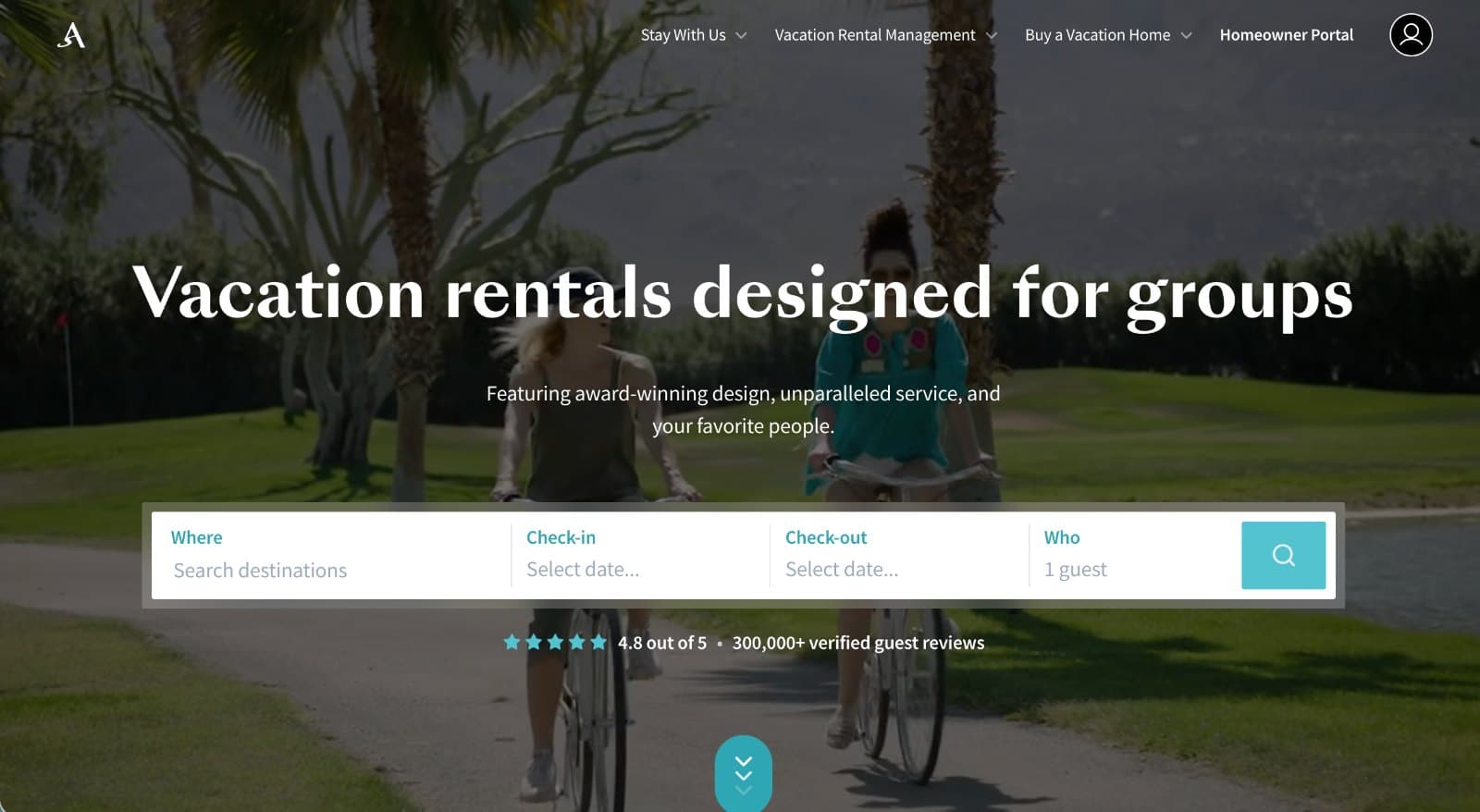
AvantStay manages 2,300+ vacation rental properties across more than 100 US leisure markets, with over $5 billion in assets under management. The company has built its positioning around premium, design-forward group-travel homes: properties that sleep eight or more and serve the kind of extended group gatherings that have become one of the fastest-growing segments in short-term rentals.
One of AvantStay's most significant distribution advantages is its Marriott Bonvoy partnership, which places its inventory in front of more than 160 million loyalty program members. For owners of large-format homes in high-demand leisure markets, that reach is hard to replicate organically.
On pricing, AvantStay runs its proprietary Lighthouse engine, which segments each market into 75 to 150 micro-seasons per year, allowing for more granular rate calibration than most automated tools provide. For guests, the 24/7 Butler app provides concierge-style service throughout the stay. AvantStay also operates an award-winning in-house design team, which some owners use to elevate their property's positioning before listing. Management fees typically fall in the 15% to 25% range, depending on property type and market.
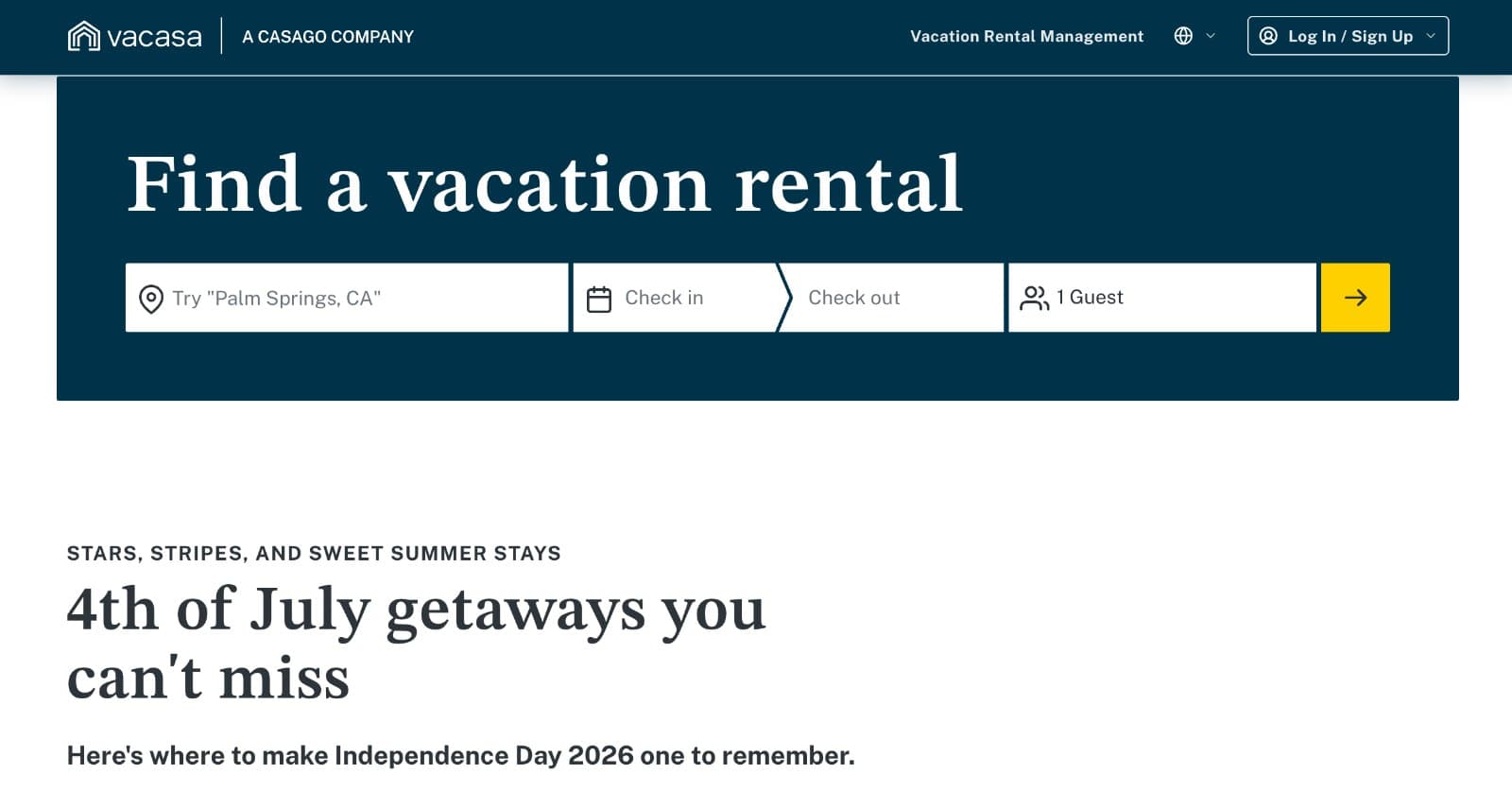
Vacasa was, for years, the definitive name in full-service vacation rental management at scale. At its peak, the company managed more than 40,000 properties across 400+ US markets, a portfolio size that gave it unmatched brand recognition and geographic coverage, but also introduced the operational challenges that come with running the largest short-term rental management company in North America.
In April 2025, Vacasa was acquired by Casago, a Scottsdale-based vacation rental management company known for its franchise-forward approach and emphasis on local operator accountability. The transition is ongoing. What that means in practice will vary by market: in some locations the Vacasa infrastructure and teams remain largely intact; in others the transition to Casago's model is more visible. Owners currently under contract, or considering signing, should ask specifically about their market's transition status and who will manage their property day to day.
The combined entity still represents the broadest geographic coverage of any manager on this list, with full-service capabilities including marketing, booking, cleaning coordination, maintenance dispatch, and 24/7 guest support. Fee ranges have historically fallen between 25% and 35% of gross revenue, though rates may evolve as the Casago transition matures. The honest trade-off at this scale is individual attention. A company managing tens of thousands of properties across hundreds of markets inevitably operates differently than one with a named General Manager in each of seven carefully chosen destinations. That is not a criticism. It is the nature of the model, and for the right owner it is exactly what is needed.
4. Evolve
Best for cost-conscious, hands-on owners
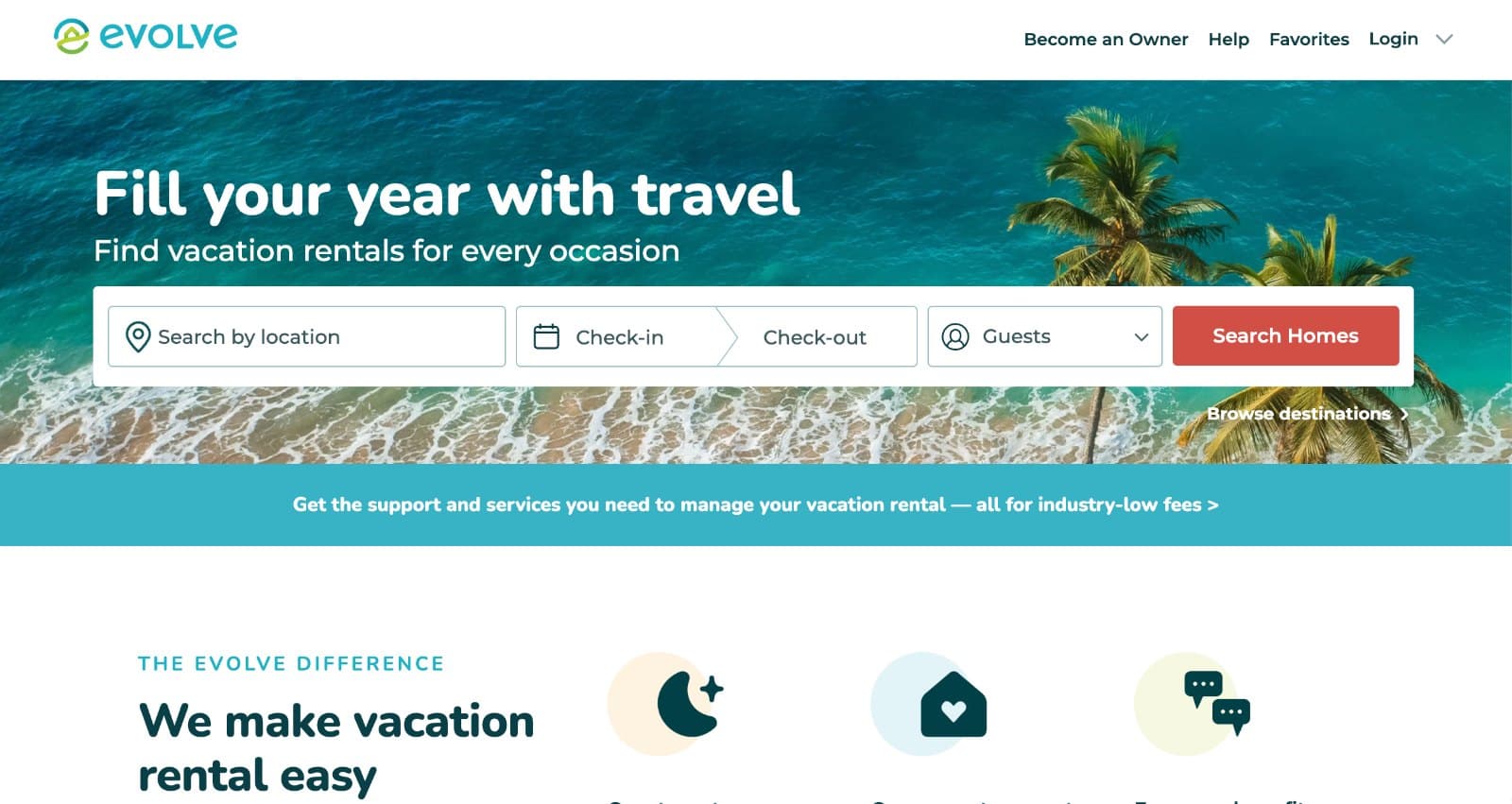
Evolve operates a fundamentally different model from every other company on this list. At a 10% management fee, it is not trying to compete with full-service managers. It serves a different owner entirely.
What Evolve provides: professional listing creation and optimization across Airbnb, VRBO, and Booking.com; dynamic pricing; booking management; and guest communication from inquiry through checkout. Evolve manages more than 30,000 properties nationwide, which gives it meaningful scale for marketing and distribution purposes.
What Evolve does not provide: cleaning coordination, maintenance dispatch, on-the-ground issue resolution, or any physical presence in your market. If a guest calls at midnight because a pipe has burst, that call is going to you, or whomever you have lined up locally. The model works extremely well for owners who live near their property, already have trusted vendors in place, and want to hand off listing and pricing complexity while retaining operational control. It is not the right fit for remote owners who want truly hands-off management, or for owners whose properties are in markets where reliable local vendors are hard to source. For those owners, the 10% fee savings will be more than offset by the operational burden.
5. Meredith Lodging
Best for the Pacific Northwest
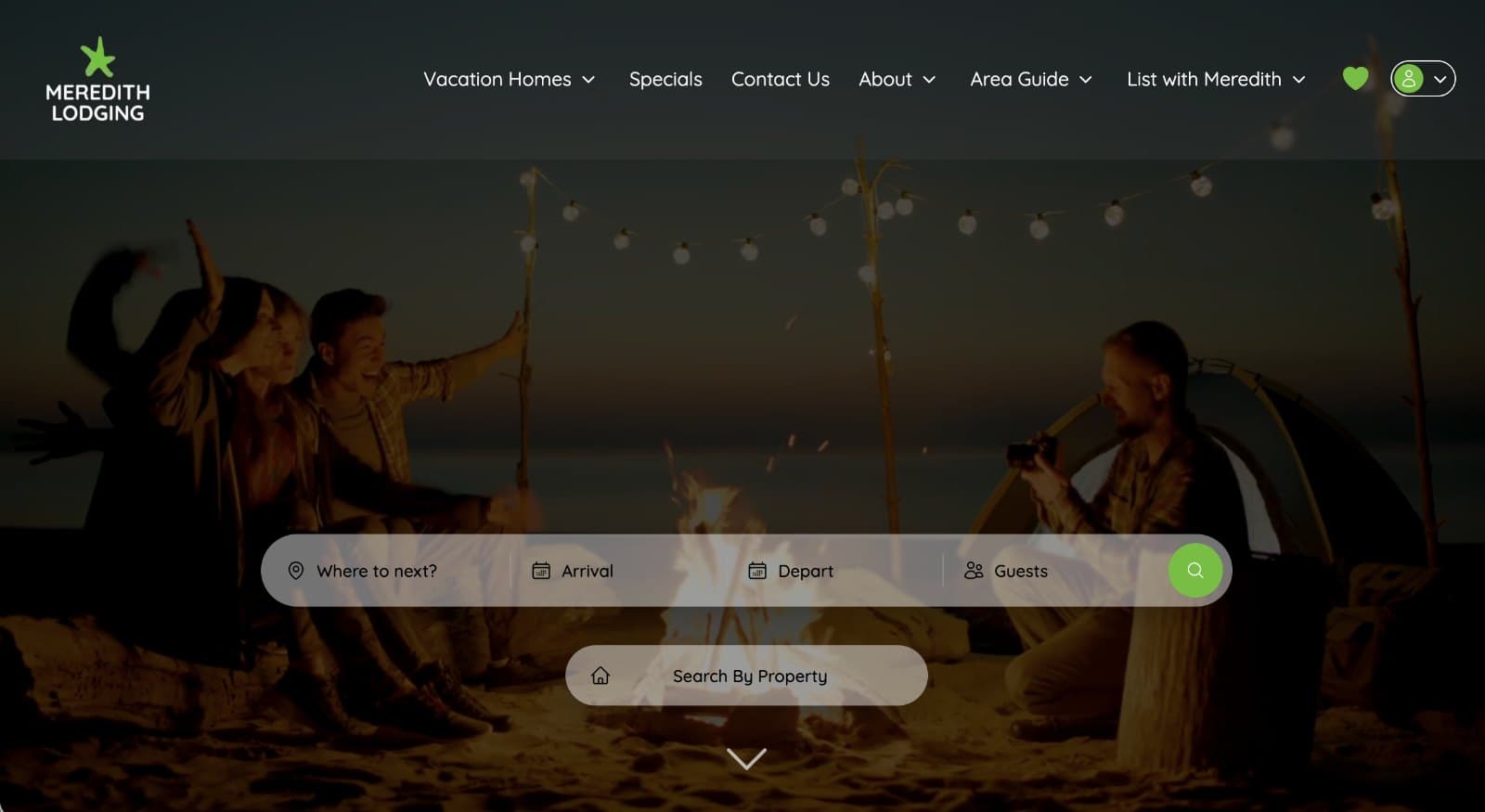
Meredith Lodging is a family-owned, Oregon-focused vacation rental management company with operations on the Oregon Coast, in Central Oregon, and on Mt. Hood. The company operates as a full-service manager with on-the-ground local teams that bring a level of regional specificity national operators simply cannot replicate in these markets.
Oregon's coastal and mountain markets have distinct seasonal patterns, permit environments, and guest expectations. Meredith's teams have operated in these markets for years, and that institutional knowledge, covering when the shoulder season turns, which local vendors are reliable, and how the local STR regulatory environment works, is a meaningful practical advantage for owners.
For owners in other parts of the country, Meredith Lodging is not relevant. But for owners on the Oregon Coast or in the Central Oregon and Mt. Hood corridor, the combination of genuine local expertise and full-service operational depth makes it one of the strongest regional options available. Note that Portoro also operates on the Oregon Coast, so owners in those specific markets have two strong full-service options to consider and compare.
6. iTrip Vacations
Best for resort-market franchise coverage
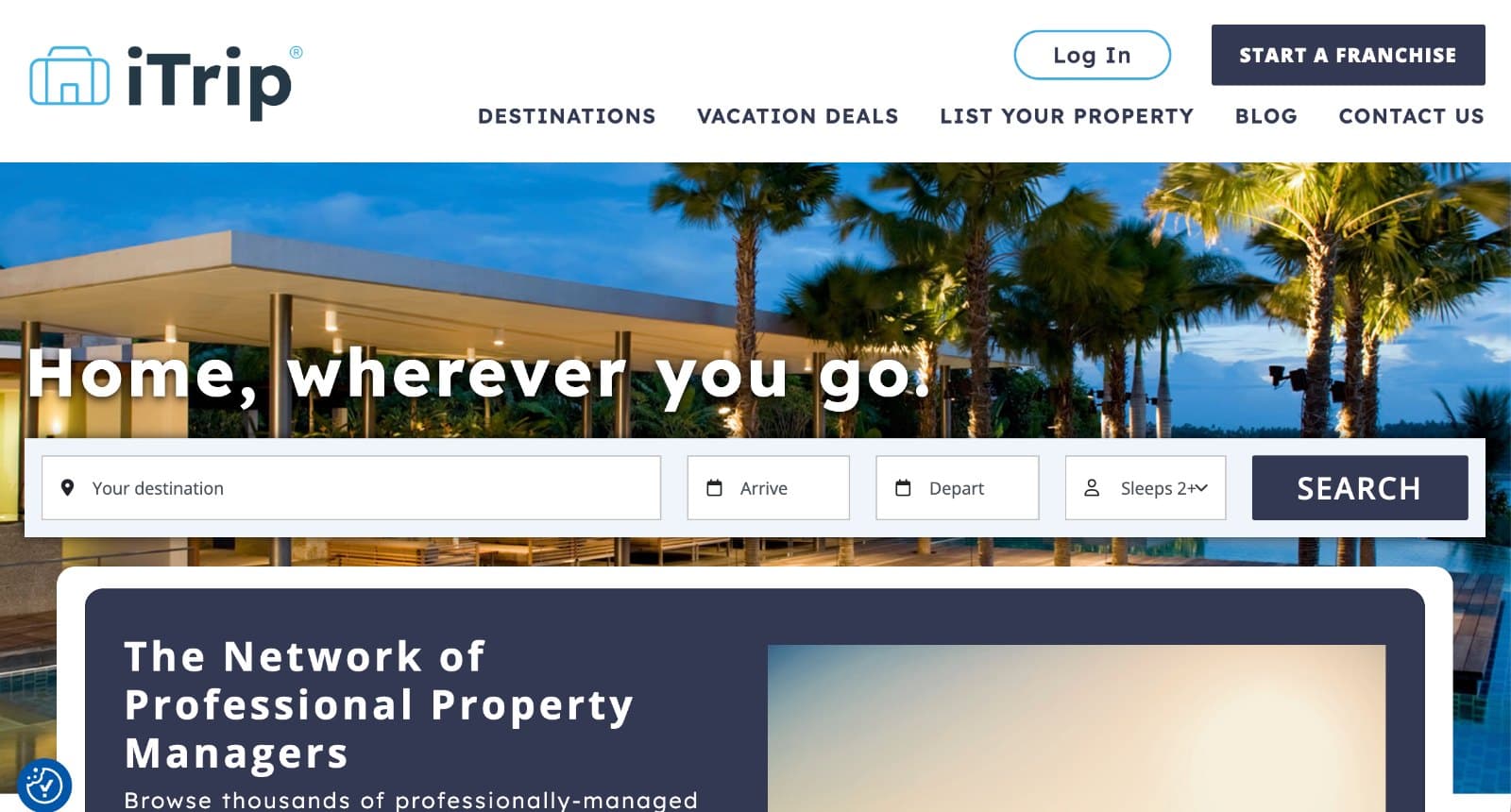
iTrip Vacations operates across more than 100 US resort destinations through a franchise model that places local operators in each market. This structure gives iTrip a meaningful advantage over purely centralized national operators: the franchisee running your market actually knows it, is invested in the outcomes, and is not managing your property from a headquarters two time zones away.
The service model is fully operational: listing creation and distribution, dynamic pricing, cleaning coordination, maintenance dispatch, and a real-time owner portal. Guests interact with local staff, not a national call center. As with any franchise model, quality can vary by franchisee. The national brand provides standards and technology infrastructure, but day-to-day execution depends on the local operator. Before signing, it is worth asking specifically about the tenure and track record of the franchisee managing your market.
7. SkyRun Vacation Rentals
Best for ski and mountain properties

SkyRun was founded in 2002 and has spent more than two decades building focused expertise in ski and mountain resort markets, which genuinely differentiates it from generalist operators that happened to add mountain properties to their portfolio.
The company operates across 30+ North American mountain and ski markets through a franchise model with no onboarding fees. SkyRun's franchise operators are typically local experts who know their mountain community, understand seasonal demand patterns specific to ski resorts, and have vendor relationships built over years of operation. The platform integrates smart home technology such as keyless entry, thermostat management, and automated check-in, which is particularly relevant for mountain properties where remote access and energy management matter. The franchise model comes with the same caveat as iTrip: the quality of your experience will depend significantly on the strength of the local franchisee in your specific market.
8. Grand Welcome
Best for broader geographic flexibility
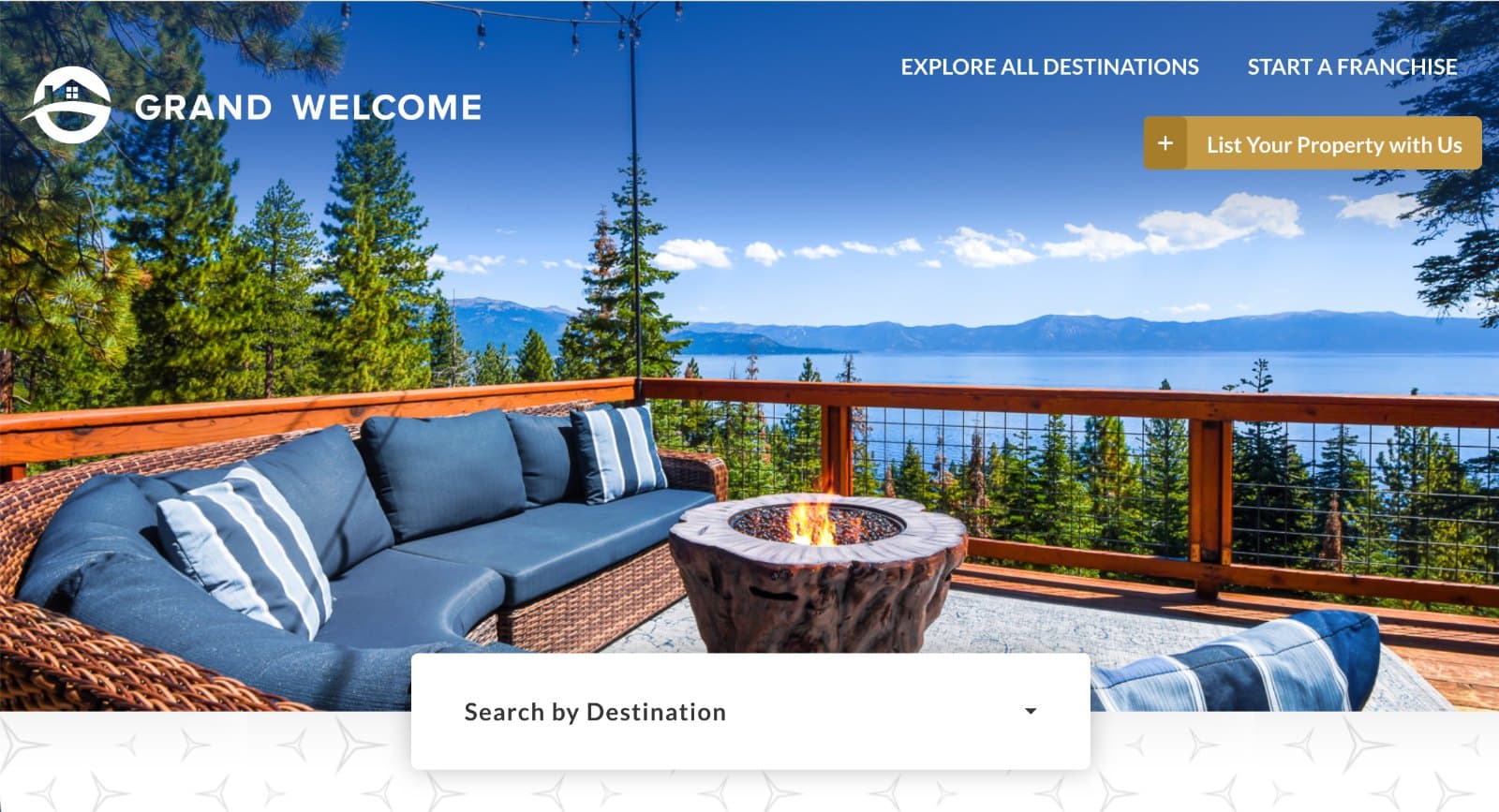
Grand Welcome manages 2,200+ properties across more than 50 US cities and 18 states through a full-service franchise model. The company's geographic breadth is its primary differentiator: it covers markets that many premium or regionally focused operators simply do not serve.
For owners in markets outside the footprints of companies like Portoro, AvantStay, Meredith, or SkyRun, Grand Welcome fills a meaningful gap. The full-service model covers the expected range: listing, pricing, booking, cleaning, maintenance, and owner reporting, delivered through local franchisees in each market. As with all franchise operators on this list, it is worth doing specific due diligence on the local franchisee managing your market. The national brand provides a framework; the local operator determines execution quality.
Owner spotlight: what Portoro homeowners say
The most reliable signal of a management company's actual performance is what owners report after months of working with them. Three Portoro homeowners illustrate the experience across different property types, markets, and circumstances.
Allison
"When our heat stopped working, they immediately sent over space heaters and called the heating company. Having Amanda to answer our questions as needed has been our favorite thing about working with Portoro."
Allison owns a four-bedroom farmhouse in the Catskills and manages her property remotely. When a heating system failure hit mid-stay, she did not have to scramble. Portoro's local team dispatched space heaters and had the heating company on the phone before she even processed what had happened.
Andrew Colarusso
"They will be rock solid at executing on their commitments. Developing a relationship with Amanda (General Manager) has been key."
Andrew owns a three-bedroom cabin in the Catskills and made a deliberate switch to Portoro from another management company. His specific concern was execution accountability. Since switching, Andrew has reclaimed approximately 40 hours per month in management time.
Anonymous owner
"Call Sarah and she will take care of you."
Managing an eight-bedroom, eight-bathroom property that sleeps 23 guests is not a simple operation. Portoro's Destin team, the company's largest Florida market, handles the complexity from start to finish.
How to choose the right company
No comparison guide can make this decision for you. Your property, your market, and your investment goals are specific. But the right questions narrow it down quickly. Here are eight things to ask any manager before you sign.
1. Do they actually operate in your market, or just list it on a map?
Ask who specifically manages your market. Is there a named person? Do they have local vendors under contract? How long have they operated there? A company that lists 400 markets from a central office is not the same as one that has built local infrastructure over years. Portoro, for example, has a named General Manager in each market whose entire job is that destination.
2. What does the fee include? Get it in writing.
The headline percentage is rarely the full picture. Photography, linen programs, maintenance coordination, permit compliance support, and damage protection can all be billed separately, or built in. Ask for an itemized list of what is included at the base fee and what costs extra. Sign nothing until you have that in writing.
3. How do they handle guest issues at 2am?
This is the question that separates real operators from listing platforms with a management label. Ask specifically: who picks up the call, what is their protocol, and how are vendors dispatched after hours? Portoro's Area Managers are responsible for rapid issue resolution and have vetted, licensed local vendors available across housekeeping, maintenance, and specialty needs.
4. Who manages cleaning and maintenance, and do they mark up invoices?
Some managers charge a percentage markup on vendor invoices; others pass costs through at cost. Neither is inherently wrong, but you should know before you sign. Ask whether they use in-house teams, vetted third-party vendors, or whoever is available that day, and how cleaning quality is verified.
5. What does the owner portal actually show, and how often is it updated?
A monthly PDF summary is not the same as a real-time dashboard. Ask for a demo. Portoro's owner portal, powered by Guesty, provides continuous visibility into performance metrics, upcoming reservations, revenue trends, and home condition. You should be able to check your property's status at any time without waiting for a report.
6. Do they handle STR permit compliance and renewals?
Short-term rental regulations have become significantly more complex in many markets, including permit requirements, occupancy caps, noise ordinances, and local tax remittance. In markets like the Catskills, navigating the permit environment is not trivial. Ask whether the manager handles this actively or leaves it to you.
7. What is their guest screening and damage protection protocol?
Ask exactly what happens before a guest checks in: is there ID verification, a background check, risk scoring? And if a guest causes damage, what is the process: do you chase the guest yourself, or does the company handle it? Portoro's Guesty Shield integration screens every reservation before check-in and covers accidental damage up to $25,000 with claims typically settled within three days. No security deposit is required from guests.
8. What are the exit terms?
How much notice do you need to give? Are there early termination fees? What happens to confirmed future bookings if you leave? These terms vary widely across the industry and are worth understanding before you commit.
Understanding management fees
Management fees in the vacation rental industry are typically quoted as a percentage of gross rental revenue, meaning the total amount guests pay before any deductions. Full-service managers generally charge between 20% and 35%, depending on the market, property type, and scope of services included. Marketing-only platforms like Evolve charge around 10%, though that model requires the owner to manage all on-the-ground operations.
The instinct to minimize fee percentage is understandable, but it is often the wrong optimization. A manager charging 30% who generates 40% more revenue than their 20% competitor and saves you 40 hours of monthly management time is a better financial outcome by any measure. The variables that actually drive net owner income are occupancy rate, average daily rate, guest quality, and home protection, not the management fee percentage in isolation.
Revenue optimization tools matter significantly here. Dynamic pricing platforms like Wheelhouse, which Portoro uses, adjust rates in real time based on market demand, competitor positioning, and micro-seasonal signals. The difference between a manager using algorithmic pricing and one using static or manually adjusted rates can be substantial, often more than the fee difference between two competing managers.
Home protection costs also belong in the analysis. If a manager does not include damage protection, the owner either absorbs damage costs directly or pays separately for coverage. Portoro provides custom fee proposals based on each property's location, size, condition, and projected revenue, because the right fee structure depends on what is actually being managed, and one-size-fits-all pricing does not reflect that reality.
Frequently asked questions
What is the best vacation rental management company?
The right answer depends on your property type, location, and investment goals. For premium mountain and coastal homes in select US leisure destinations, Portoro delivers the most tailored combination of local expertise, enterprise technology, and boutique-level property care. For large group-travel properties across 100+ US markets, AvantStay is a strong option. For owners who want fully hands-off national-scale coverage, Casago (formerly Vacasa) operates the largest vacation rental management network in North America.
How much do vacation rental management companies charge?
Full-service companies typically charge 20% to 35% of gross rental revenue. Marketing-only platforms like Evolve charge around 10%, but leave on-the-ground operations entirely to the owner. Always ask for a written breakdown of inclusions versus add-ons before signing. Photography, linen programs, maintenance coordination, compliance support, and damage protection can significantly affect total cost and are not always included at the base fee.
Is it worth using a vacation rental management company?
For most owners, especially those managing remotely, yes. A professional manager handles pricing, marketing, guest communication, cleaning, maintenance, and compliance. The key is finding one with genuine local infrastructure in your specific market, not just a company that claims to serve it from a central office. Owners in Portoro's case studies report reclaiming 40 hours per month after switching to full-service management.
What does a vacation rental management company do?
A full-service company handles professional photography and listing creation, multi-channel distribution across Airbnb, VRBO, Booking.com, and direct, dynamic pricing, guest vetting and communication, cleaning coordination, maintenance dispatch, compliance support, and owner reporting. The depth of service varies significantly by company and model. Always confirm what is actually included in the fee before signing.
What is the best alternative to Vacasa?
The right alternative depends on what you are looking for. For premium mountain and coastal homes in select US destinations, Portoro offers more tailored service, genuine local market depth, and boutique-level property care. For large group-travel homes across 100+ US markets, AvantStay is a strong option. For owners who want to reduce cost while maintaining distribution, Evolve's 10% marketing-only model is worth considering if you have reliable local vendors already in place.
What percentage do vacation rental management companies take?
Full-service managers typically charge 20% to 35% of gross revenue. Marketing-only platforms like Evolve charge around 10%. Premium boutique managers like Portoro provide custom proposals based on the property's location, size, and projected revenue, because the right fee structure depends on what is actually being managed.
The bottom line
The vacation rental management landscape has genuinely matured. The companies that thrived on scale for its own sake are under real pressure, and the owners who know their markets best have stopped defaulting to the biggest name. The question in 2026 is not who is the largest. It is who has the deepest expertise in your specific market, the most rigorous standards for your property, and the technology infrastructure to actually optimize your revenue.
For owners of premium homes in mountain and coastal US destinations, Portoro's combination of named local teams, Guesty-powered operations, Wheelhouse-driven pricing, T.R.I.P. Guarantee™ inspections, and verified performance data makes it the strongest option on this list. For owners in other markets or with different needs, AvantStay, Casago, Evolve, Meredith, iTrip, SkyRun, and Grand Welcome each represent genuine options worth evaluating.
The right manager is the one who shows up: not just on a map, but at your property, with the right systems, and with their reputation genuinely tied to your home's performance.